The World Cup could be coming home but there’s a far greater prize and it’s available to us all
Apparently the nation’s going a little bit crazy about football. I suppose it’s understandable. After all, England are through to the World Cup semi-finals for the first time in 28 years. For a bit of perspective, the last time England were in a World Cup semi-final, I’d only just started school.
So it’s perhaps no great surprise that there’s excitement in the air ahead of the match against Croatia, or that everyone from big companies to local councils is putting plans in place to roll out if “our boys” make Sunday’s final.
There’s no question there are some positives to the whole situation. The World Cup is getting people out of their houses and meeting up together. It’s bringing people together with a common aim, a shared passion, a collective hope. For some businesses, particularly those screening it, it’s providing a welcome financial boost. And it’s encouraging children to get outside and kick a ball about instead of whiling away the hours on electronic gadgets.
But what about the other side? Statistics show a correlation between poor results in football and instances of domestic violence. How many people are willing England to win not because they want to see the trophy come home but because it’s one less chance for them to receive a fat lip or a black eye? What about the scenes that have been witnessed in recent days of people “celebrating” England’s success by vandalising their own communities, including causing thousands of pounds worth of damage to emergency vehicles, all in the name of “fun”? Presumably the explanation to this behaviour is that they were three sheets to the wind and rational thought had long since departed them.
And what happens if things don’t go to plan? If Croatia pip England to a place in the final, or if we’re singing Three Lions on Sunday afternoon but France get the better of us when the heat is on, what are we left with?
If they don’t come home carrying the trophy, will Harry Kane and his teammates go from hero to zero faster than they could miss a penalty? If Jordan Pickford lets in a goal that spells the end of the country’s trophy-winning chances, will he return home as public enemy #1?
In football, one mistake can follow a player for the rest of your life. Remember England goalie Robert Green in the 2010 World Cup? Performance is everything. One missed kick or slip of the hand can spell sporting disaster and the wrath of the fans. Twenty successful moves can immediately pale into insignificance as a result of the one missed save, own goal or failed shot that spells the end of the country’s dream, however hard they might have been trying.
There aren’t many areas of life that that applies to. Sure, there are some careers when one mistake can be truly costly. In medicine, for example, mistakes can cost lives and doctors have to live with that. But how many careers are really that consequential. And how often does wider society apply unnecessarily-severe consequences to sportsmen and others who have simply tried their best?
It’s strange, when you think about it, some of the ways in which society rates success and failure. So many people in the public eye feel unquantifiable pressure to be better, or an unbearable sense that they have failed to live up to what people – their families, friends, peer groups, fans – expect of them. So many people feel the weight of society bearing down and demanding that they be the best – not even just the best they can be sometimes, but literally the best, an unachievable goal.
But, thankfully, there is another way – another option in which you can claim the greatest prize no matter how much of a failure you are and how often or how badly you’ve screwed up. God invites everyone to be His children and live eternally with Him, not because of what we have done or can offer, but because of what Jesus has already done and given. Jesus gave up His life to pay the price for all our failures – the ones we have already made and the ones we don’t even know we’re going to make yet – so that we don’t have to take the punishment of eternal separation from God ourselves. Whether we score a winning goal or let the ball slip through our hands and into the back of the net. Whether we have the best job, house, car, family life, or have precious little. Whether everything seems to go right in our lives or we seem to only be able to watch things crumble around our ears.
The ultimate prize any of us can claim cannot be won through our own endeavours – because if it relied on us to earn it we could never measure up. The ultimate prize is freely given, not in recognition of who were are and what we can offer but because of the prize giver and what He has already given. In the Bible, Ephesians chapter 2, verses 8-9, tells us: “ For it is by grace you have been saved through faith, and this not from yourselves; it is the gift of God, not by works, so that no one can boast.”
Earthly trophies are transient. Heavenly salvation it eternal, and free to all. We simply have to claim it by asking God to come into our lives and forgive the wrong things we have done.
So let’s cheer on England as they aim for World Cup glory, but let’s also remember what really matters. And if you feel like you just can’t win in life, remember one thing; you don’t need to achieve anything in your own strength to claim the greatest prize of all.
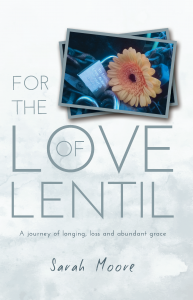 Sarah Moore is the author of For the Love of Lentil, A journey of longing, loss and abundant grace, which tells the story of her experience of pregnancy and miscarriage. Copies of the book are available here.