Rich or poor, we’re not as unequal as we are led to believe
I hear a lot of talk about wealth vs poverty, of abundance vs want, of haves vs have nots. I hear a lot about the apparent inequality of such extremes. And, on the one hand, it is an inequality because, put simply, some people have more money and material possessions at their direct disposal than others, and some, often through no fault of their own, find getting by in life and making ends meet harder because they don’t have the same material resources to draw from.
But that’s just on the one hand and, on the other hand, we are all very much equal. And here I shall attempt to explain why.
Ultimately, nothing that any of us has is truly ours. Psalm 24, verses 1-2 tell us: “The earth is the Lord’s, and everything in it, the world, and all who live in it, for he founded it on the seas and established it on the waters.” Yes, your bank balance might tell you that you have a few hundred, a few thousand, even a few million pounds, you might have a shiny new car on your driveway and you might own a house or two, but in reality you can only ever steward these things, make use of them, care for them (or not) until the time comes to pass them on. When each earthly life comes to an end, or when the life of the Earth does, none of us can take with us the material things we possessed in this life. And we would have none of those things if they hadn’t been provided for us, one way or another, by God.
And whether we have a little or a lot, and whether we are in the privileged position of being able to exchange money in return for food and other goods and services, or if we have to rely on the kindness and generosity of others in sharing their provision, one way or another, God can provide the things we need.
Psalm 145:15-16 says, “The eyes of all look to you in hope; you give them their food as they need it. When you open your hand, you satisfy the hunger and thirst of every living thing.” Psalm 22: 26 says, “The poor will eat and be satisfied; those who seek the Lord will praise Him – may your hearts live forever.”
But how can any of us make sure we receive such provision? Matthew 6:31-32 says, “Don’t worry and say, ‘What will we eat?’ or ‘What will we drink?’ or ‘What will we wear?’ The people who don’t know God keep trying to get these things, and your Father in heaven knows you need them.” Luke 12:31 tells us, “Seek the Kingdom of God above all else, and he will give you everything you need.” And Psalm 34:10 says: “The lions may grow weak and hungry, but those who seek the Lord lack no good thing.” All we need to do is to know and put our trust in God.
But why does God give us these things? It surely can’t just be so we can enjoy having nice houses, flash cars and lots of money. If it was, He’d give to everyone in material abundance. The fact that He doesn’t suggests there must be some other reason.
1 Timothy 6:17 says, “Instruct those who are rich in this present world not to be conceited or to fix their hope on the uncertainty of riches, but on God, who richly supplies us with all things to enjoy.” God gives us good things to point us towards Him and, I believe, to enable us to point others towards Him.
Luke 12:24 tells us, “Look at the birds. They don’t plant or harvest, they don’t have storerooms or barns, but God feeds them. And you are worth much more than birds.” The main difference I can see between us and the birds is that we have the potential to serve God’s purposes, acting out of the relationship we have with Him to do the things He leads us to do. If we are among those who have plenty in the way of material assets, that is likely to seem simple. But there is no need to be downhearted if you feel you have little to offer.
Luke 21 tells of the widow who had only two small coins to her name but gave all she had, and was said by Jesus to have given more than any of the rich givers, because she had given her all while they had retained some of their wealth for themselves. In fact, Luke 12:15 counsels against greed and says, “Then He said to them, ‘Beware, and be on your guard against every form of greed; for not even when one has an abundance does his life consist of his possessions.’”
But how can we give all we have, whether that is materially or in acts of service, and still be able to live? Because the Lord will provide all that we need to serve His purposes and His plan.
Hebrews 13: 20-21 says, “Now may the God of peace, who through the blood of the eternal covenant brought back from the dead our Lord Jesus, that great Shepherd of the sheep, equip you with everything good for doing his will, and may he work in us what is pleasing to him, through Jesus Christ, to whom be glory for ever and ever. Amen.” And 1 Peter 4:11 tells us, “…If anyone serves, they should do so with the strength God provides, so that in all things God may be praised through Jesus Christ…”
And how can we know and trust that it will work? Because Jesus has demonstrated His faithfulness to His followers before. In Luke 9, Jesus sent out the disciples to carry out works of healing in His name and specified that they were to take no provisions with them – no food, no spare clothes, no money to buy them. He called on them to have the faith that He would provide for all their physical needs in the same way that He had provided them with the power and authority to drive out demons and cure sickness in His name. And He didn’t disappoint.
In the same way that He provided those first century disciples with everything they needs to live their lives and do His works, so the Lord will provide his 21st century children with those self-same things.
Whether you’ve got money in the bank to do with what you wish on a whim, you’re reliant on the generosity of others to put food on your table, or you’re anywhere in between, what matters is not how much you have but what you do with it and how you view it.
And, ultimately, every follower of Jesus has exactly the same, whether they materially have a little or a lot. That is, every follower of Jesus has exactly the provision he or she needs to be able to fulfil the purposes God has put on his or her life. It’s worth remembering that if you’re ever tempted to look at a fellow believer with envy that they have more than you or pity that they have less. Our material wealth is different but that’s because our roles in God’s plan are different, but to each He will give exactly what we need to fulfil those roles.
And that is both the ultimate equality and the ultimate privilege.
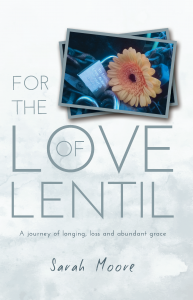 Sarah Moore is the author of For the Love of Lentil, A journey of longing, loss and abundant grace, which tells the story of her experience of pregnancy and miscarriage. Copies of the book are available here.